Saturday, December 13, 2025

“When the ETS Stopped at Rengam: A Town’s Pride”


I hail from  a small town called Renggam—or Rengam, depending on whether you follow the locals or KTM’s spelling. Even today, I smile at the inconsistency. Maybe both are right in their own way. Maybe that’s just how small towns are: full of stories, full of versions.


Signage at Rengam Station


Old Signage 


The railway station was the heartbeat of my childhood. My home stood barely a hundred metres away, close enough that the rumble of passing trains became part of our daily soundtrack. If you were riding through town, you could spot our house without anything blocking the view. 

We never owned a passenger car, so trains were our gateway to the world. Every journey—short or long—began with the familiar clang of the station bell and the smell of metal tracks warming under the sun. One of the greatest treats of my younger days was taking the train to Singapore. That trip felt grand, almost ceremonial, as if the world suddenly expanded the moment the train pulled away.

I spent so much time at the station that I eventually befriended the station master. He wasn’t just a railway man to us; he was a mentor of sorts. He introduced us to stamp collecting, taught us how to buy stamps from overseas, and opened our eyes to a world far beyond Rengam. For a small-town kid, those stamps were tiny windows into distant places. On occasion, I'd even take an afternoon nap on the station's wooden benches. I recall one incident where the train had extra-long coaches. The platform wasn't long enough, and I ended up disembarking into a bush!

Back then, the fare between Rengam and Johor Bahru was only RM2.00 for a single trip. It sounds unbelievable now, but that was the rhythm of life then—simple, affordable, unhurried. 


RM3.00 in 2005


Yet, being a small town, most express trains thundered past without stopping. We were used to watching opportunities rush by, quite literally.


These tracks gave way to ETS


That’s why 12 December 2025 felt like a moment carved into history. KTM launched the ETS (Electric Train Service) connecting Johor Bahru and Kuala Lumpur, and for the first time, the sleek, modern train made an official stop at Rengam. For our little town, it wasn’t just a new service—it was a recognition long overdue.


I won’t go into the full details of the opening ceremony at JB Sentral. The newspapers and TV stations have already captured the excitement: the crowds waiting for the gates to open, the buzz of passengers eager to be part of the maiden journey, the sense of pride that filled the air.

What I want to share instead is something quieter, something more personal—the door gifts handed out that day. Small tokens, perhaps, but to me they represent a bridge between the past and the present. A reminder that the railway that shaped my childhood is still evolving, still connecting, still part of my story.


The Souvenir Box


A wooden train ticket


Key Chain


Can't think a proper name for this piece of cloth


Collar Pins


This blog doesn’t attempt to capture every aspect of the train ride experience. I’ve chosen not to dwell on certain details because, for me, this journey is deeply personal. These fleeting moments — the shine of a new train, the excitement of a first stop — are bound to shift with time. What you see today is a spotless, gleaming carriage. What will it be, say, a year from now? Only time will tell.
Still, I’ll leave you with one small, practical note: the air-conditioning is colder ( it goes below 16 Degree C ) than expected. If you’re planning a ride, bring a jacket — comfort, after all, is part of the journey too.
And as the train pulls away from Rengam, I’m reminded of all the times I stood by the tracks as a child, watching the world rush past. 


P/S: Childhood memories are far too many to capture in full; they surface only when they wish to. I’m sure I’ve left out some of the most exciting moments I once shared with KTM, but for now, this feels like the right place to pause. The story ends here — until the next adventure finds its way onto the tracks.


Friday, December 5, 2025

🍮 The Sweet Success of a Malay Entrepreneur: Banana Pudding Stall Opposite Giant Suria


A Taste of Ingenuity in Everyday Malaysia

It’s a familiar sight in Malaysia—Malay entrepreneurs setting up food stalls that bring flavor and warmth to local communities. From nasi lemak to satay, these stalls are part of the country’s vibrant street food culture.

Recently, I stumbled upon a unique stall run by a Malay lady in an open space opposite Giant Suria, Johor Bahru. Unlike the usual local delicacies, she sells banana pudding—a dessert not traditionally associated with Malay cuisine ( I may be wrong ). Yet, the crowd tells a different story. An endless line of customers eagerly waits to satisfy their sweet tooth, proving that innovation can win hearts (and taste buds).


Branding That Stands Out

What impressed me most was the stall’s attention to detail. Beyond just selling pudding, she has invested in custom-printed logos on serviettes and cups, giving her small business a professional touch. This branding effort reflects her creativity and determination to stand out in a competitive food scene.


Where to Find It

If you’re curious to try, the stall is located opposite Giant Suria, Johor Bahru, set up in an empty space. Business hours are typically in the afternoon, so plan your visit accordingly.


This enterprising Malay entrepreneur shows how passion, ingenuity, and a dash of branding can turn a simple dessert into a thriving business.

Saturday, November 29, 2025

Yangtze River Cruise Aftermath: Battling Flu While Travelling


 🌏 The Aftermath of Travelling

🛳 From River Cruise to Hotel Stay

On the final day of our Yangtze River cruise travel experience, we checked into a luxury hotel in Shanghai. I shared a room with my elder brother, and though the journey had been exhausting, I looked forward to a restful night.

😷 A Cough That Spread

That night, my brother’s sporadic coughing echoed through the room, stealing bits of sleep. Despite the disturbance, I managed to rest after twelve long days on the river. By morning, however, my the younger brother had caught the same travel-related flu virus, and his symptoms quickly worsened.

At Guangzhou Airport, the medical clinic had no suitable medicine for his condition. Back home, he was eventually given strong treatment, including antibiotics for flu symptoms. Meanwhile, my elder brother took a pre-emptive dose of azithromycin and, according to flu test kits, was soon free from cough and flu.

🤒 My Own Turn

Three days after returning home, I began to feel the textbook signs of a viral infection after travel: a severe sore throat, sporadic coughing, and phlegm building up rapidly, making breathing difficult.

A friend mentioned that in the Netherlands, doctors often avoid prescribing medicine for flu, preferring to let the body fight naturally. In Malaysia, however, doctors are more sympathetic, prescribing a range of medicines to ease symptoms.

💊 The Long List of Remedies

Over the past two weeks, I’ve been prescribed and taking:

  • Bromhexine (for cough relief)
  • Loratadine (antihistamine)
  • Triprolidine HCl
  • Acetylcysteine (phlegm thinner)
  • Chlorpheniramine
  • Cetirizine
  • Panadol (without antibiotics)

The throat pain has eased, but the phlegm production after flu continues to linger, with no clear end in sight.

Closing Reflection

Travel often leaves us with unforgettable memories, but sometimes, the aftermath includes unexpected battles with health. This experience reminded me that recovery is not always immediate — and that different countries approach flu treatment in very different ways.

Sunday, November 16, 2025

🏞️ Day 12: November 5, 2025 Niushoushan Mountain, Nanjing City


🏞️ Day 12: November 5, 2025


Niushoushan Mountain, Nanjing City


Time of Visit: 9:15 AM – 11:15 AM

Nestled in the southern outskirts of Nanjing, Niushoushan Mountain—literally “Ox Head Mountain”—offered a serene and spiritually enriching escape on Day 12 of our journey. With its harmonious blend of natural beauty and sacred architecture, this site is a testament to the enduring legacy of Chinese Buddhist culture.

🌄 Arrival and First Impressions

We arrived just after 9 AM, greeted by crisp autumn air and a gentle morning sun casting golden light across the forested slopes. The mountain’s silhouette, resembling the horns of an ox, stood majestically against a clear blue sky. The landscape was ablaze with fall colors—fiery reds, amber yellows, and deep greens—making the entire scene feel like a living scroll painting.

🛕 Exploring the Temple Complex

Our first stop was the Niushoushan Cultural Park, home to the awe-inspiring Foding Palace. This subterranean temple is carved into the mountain itself and houses a sacred relic of the Buddha’s parietal bone. Descending into the palace felt like entering a sacred cavern—dimly lit corridors lined with intricate carvings, golden statues, and soft chanting echoing through the halls.


The architectural design seamlessly blends Tang dynasty aesthetics with modern engineering. Every detail—from the lotus motifs to the celestial murals—invites contemplation and reverence. The main chamber, with its towering Buddha statue and radiant dome, was a highlight. It’s not just a place of worship but a spiritual experience that transcends time.

🏯 The Pagoda and Panoramic Views

After emerging from the temple, we made our way to the Hongjue Pagoda, a seven-story structure perched on a nearby hill.


The pagoda itself is a marvel—its brickwork and eaves echoing centuries of Buddhist craftsmanship. Bells chimed softly in the breeze, adding a meditative rhythm to the moment. It was the perfect vantage point to reflect on the spiritual depth of the site and the natural harmony that envelops it.


📸 Final Moments and Reflections

As our visit drew to a close around 11:15 AM, we lingered in the courtyard, watching monks in saffron robes move quietly between halls and tourists snapping photos with reverent awe. Niushoushan is more than a destination—it’s a sanctuary where history, nature, and spirituality converge.

This two-hour window felt timeless, a gentle pause in our journey that reminded us of the power of stillness and the beauty of cultural heritage. If you ever find yourself in Nanjing, carve out time for Niushoushan. It’s a place that speaks not just to the eyes, but to the soul.


🌿 Day 11 November 4, 2025 : Serenity at Slender West Lake, Yangzhou City


🌿 Day 11: Serenity at Slender West Lake – November 4, 2025

After several early mornings on this journey, Day 11 offered a welcome change of pace. The shore excursion was scheduled for later in the morning, giving everyone a chance to enjoy a leisurely start to the day — a rare luxury on a packed travel itinerary. The gentle rocking of the cruise ship and the soft morning light made for a perfect excuse to linger in bed a little longer.


Local Tour Guide 

By the time we arrived in Yangzhou City, the sun was high and appetites were ready. We headed straight to a local restaurant for lunch, where the flavors of Jiangsu cuisine delighted our palates. The dishes were delicate yet flavorful — a perfect prelude to the afternoon ahead.


Yangzhou Fried Rice


Lion Head


Our main destination for the day was the enchanting Slender West Lake, a scenic gem nestled in the heart of Yangzhou. True to its name, the lake stretches out like a ribbon, flanked by weeping willows, arched stone bridges, and classical Chinese pavilions. As we strolled along its banks, the tranquil waters mirrored the sky, and the crisp autumn air carried the scent of osmanthus blossoms. It felt like stepping into a traditional Chinese painting.


By 4 p.m., we regrouped and boarded the bus, our hearts full and our cameras brimming with snapshots of serene landscapes and quiet moments.

The day concluded with a delightful surprise: a special performance by the cruise crew. In a heartwarming display of talent and camaraderie, they showcased their vocational skills.


Cocktail making


How to lay Bedsheet


 Their enthusiasm was infectious, and the evening turned into a celebration of joy, laughter, and shared memories.


*Day 10 – November 3, 2025: Jiuhua Mountain – A Sacred Summit in the Clouds*


 *Day 10 – November 3, 2025: Jiuhua Mountain – A Sacred Summit in the Clouds*


Today’s journey to *Jiuhua Mountain (九华山)* felt like a crystallization of a theme that’s been unfolding throughout this trip: *China’s tourism is deeply rooted in its mountains*, each one steeped in history, spirituality, and poetic symbolism. Jiuhua Mountain, in particular, stands out not only for its natural beauty but for its profound *Buddhist significance*.


黃精茶是一種中藥養生茶,具有補腎養氣、健脾益胃、潤肺止咳、抗疲勞與延緩衰老等功效,但不適合脾胃虛寒或體質偏濕者飲用。

The Gospel of Huang Jing

I never imagined a humble root could become the unofficial mascot of our entire trip—but thanks to our tour guide, huang jing (Polygonatum sibiricum) practically stole the show. From the moment we stepped off the bus, she was already singing its praises. Whether we were exploring ancient herbal shops, sipping tea in misty mountain villages, or waiting in line at a temple, she would launch into yet another impassioned sermon about its miraculous powers.


---


*🏞️ Morning: Ascending Jiuhua Mountain*


We left the ship around *8:30 AM*, embarking on a long and winding road that snaked through *Anhui Province’s* lush terrain. The drive itself was scenic—dense forests, mist-covered ridges, and occasional glimpses of temple rooftops peeking through the trees.


Jiuhua Mountain is one of *China’s Four Sacred Buddhist Mountains*, dedicated to *Ksitigarbha Bodhisattva*, the guardian of the underworld. The mountain’s name, meaning “Nine Glorious Mountains,” was inspired by the poet *Li Bai*, who likened its nine peaks to lotus blossoms.


The smiling sleeping Buddha showing the chin, nose and eyelash


To ease the climb, we boarded a *funicular railcar* that carried us to a higher elevation. The ride offered sweeping views of the valley below and brought us closer to the heart of the mountain’s temple complex.


---


*🛕 Midday: Temples and Vegetarian Traditions*


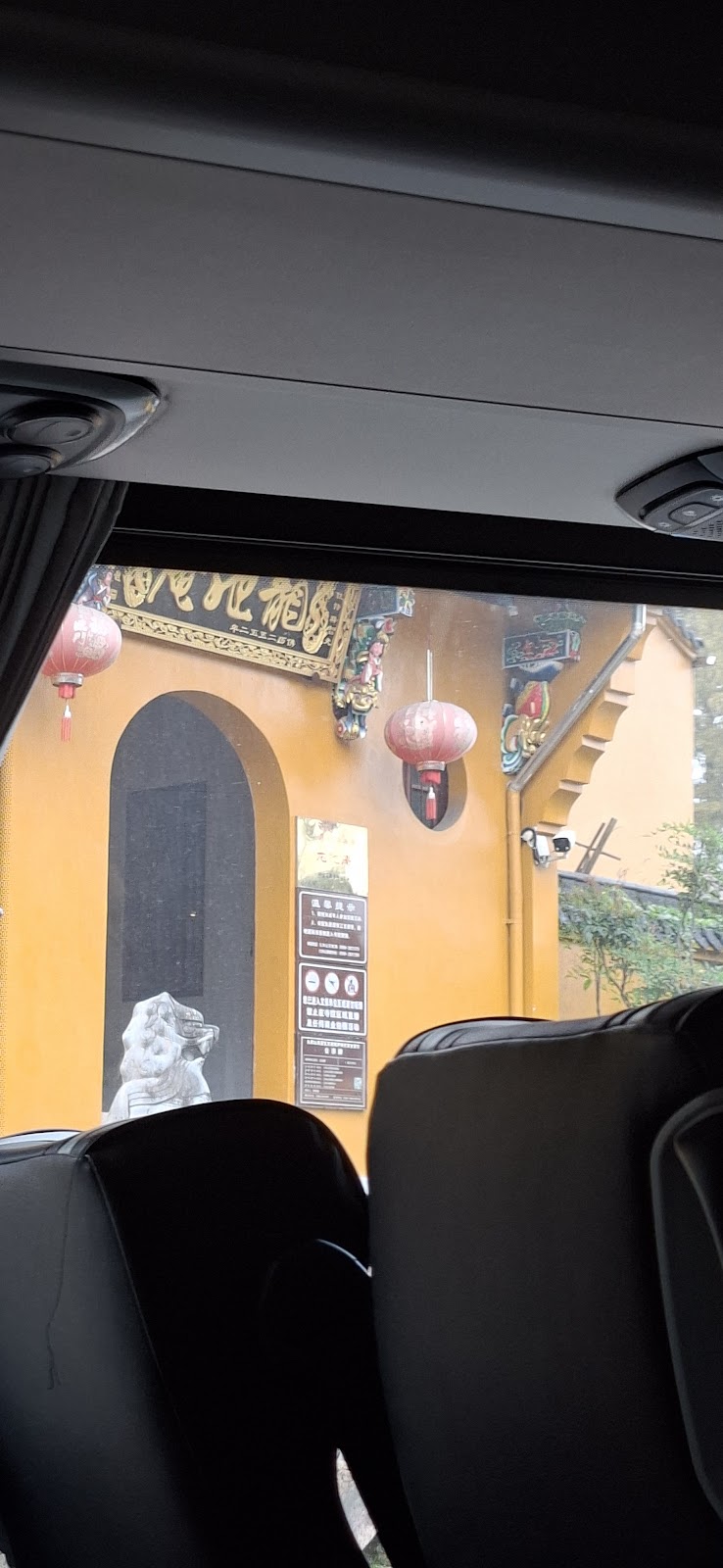
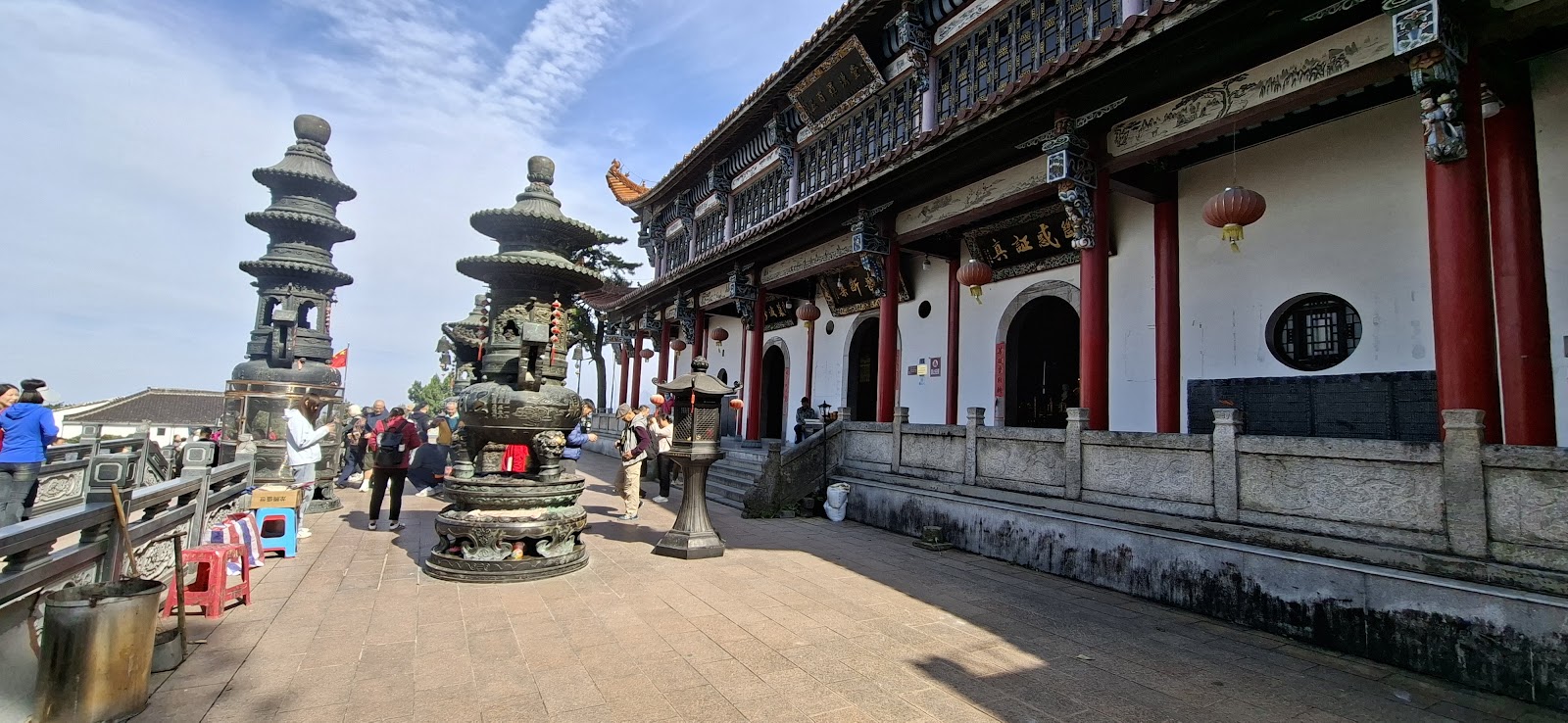
At the summit, we explored several temples nestled among the peaks. The architecture was serene and ornate—red pillars, golden statues, and incense drifting through the air. Monks moved quietly through the courtyards, and pilgrims lit candles in reverence.


Being in a *Buddhist area*, the food served here adheres strictly to *vegetarian principles*. Our lunch was a peaceful affair, featuring dishes like *braised tofu*, *lotus root*, *wild greens*, and *steamed buns*. It was a refreshing change from the cruise fare and a gentle reminder of the spiritual atmosphere surrounding us.

--


*🕓 Afternoon: Return to the Ship*


After a full day of walking, sightseeing, and quiet reflection, we made our way back down the mountain and returned to the ship around *4:00 PM*. The descent was just as scenic, with the late afternoon light casting golden hues across the landscape.


---


*📝 Reflections*


Jiuhua Mountain offered more than just views—it provided a window into *China’s spiritual heritage*, where *nature and belief intertwine*. The Chinese have a remarkable ability to see *human and divine forms in the shapes of mountains*, and Jiuhua is a perfect example of that poetic vision.


Today was long and physically demanding, but deeply rewarding. As the cruise continues, the mountains we’ve visited seem to form a spiritual thread through the journey—each one a chapter in China’s living story.


LinkWithin

Related Posts with Thumbnails